Self-Direction Skills for Adults with Disabilities at Home
Learn practical household management skills training at home for adults with disabilities. Build independence with step-by-step strategies and Wisconsin support.
Imagine a young adult in Milwaukee who wants to manage their own apartment. They want to decide what to eat for dinner, keep their space clean, pay their phone bill on time, and invite a friend over without asking permission. For many families, this is the dream: a son or daughter with a disability living a full, independent life. The path to that dream is not magic. It is built one skill at a time, in the kitchen, at the grocery store, and around the kitchen table with a budget worksheet.
Table of Contents
- [What Are Self-Direction Skills?](#what-are-self-direction-skills)
- [Household Management Skills: What "Running a Home" Really Means](#household-management-skills-what-running-a-home-really-means)
- [Practical Teaching Strategies That Work at Home](#practical-teaching-strategies-that-work-at-home)
- [How Wisconsin Families Can Access Training and Support](#how-wisconsin-families-can-access-training-and-support)
- [Common Questions from Families](#common-questions-from-families)
- [The Bottom Line: Small Steps, Big Independence](#the-bottom-line-small-steps-big-independence)
Self-direction skills for adults with disabilities, combined with household management skills training at home, can open the door to greater independence. These skills are not reserved for a select few. With patience, the right teaching approach, and support from Wisconsin programs, your family member can learn to run their own home and direct their own life.
This article walks you through what self-direction really means, which household skills matter most, how to teach them at home, and where Wisconsin families can find funding and support.
What Are Self-Direction Skills?
Self-direction is the ability to make choices about your own life, set goals, and take steps to reach them, with support when needed. It does not mean doing everything alone. It means being the one who decides what matters, what comes next, and who helps along the way.
In practice, self-direction looks like choosing what to eat for breakfast, deciding when to do laundry, managing a weekly budget, or directing a support worker to help with specific tasks. It is the opposite of having every decision made for you. For adults with disabilities, self-direction is the foundation that makes other skills meaningful. A person who chooses to learn to cook is far more motivated than a person who is simply told to cook.
Person-centered planning is the framework behind self-direction. The individual's goals, preferences, and culture guide the process. That means your family member's voice leads, and the support team follows.
Photo by Monstera Production on Pexels
Why Self-Direction Matters for Daily Independence
Self-direction builds confidence and self-esteem. When people make their own choices, they invest more in the outcome. A young adult who plans their own meals is more likely to eat what they prepare. A person who helps build their own schedule is more likely to follow it.
Self-direction also shifts the focus from "being cared for" to "living your own life." That shift matters deeply to families. You want your loved one to be safe, but you also want them to have agency. Self-direction skills make both possible.
For Wisconsin families, self-direction aligns with the philosophy behind CLTS and IRIS programs. Both emphasize participant control. The person with a disability, not the system, decides what support looks like. Teaching self-direction at home prepares your family member to use those programs well.
Household Management Skills: What "Running a Home" Really Means
Running a home involves a set of practical skills that most people learn gradually over years. For adults with disabilities, those skills can be taught directly, step by step, in the place where they will actually be used: home.
Training in the real home environment works better than classroom learning. The kitchen, laundry room, and front door are the real teachers. When a person practices making a sandwich in their own kitchen, they learn where the bread is kept, how the stove works, and what the family routine looks like. Those details do not transfer from a simulated setting.
Core Household Skills to Focus On
!Older woman in wheelchair and young man play video games together, fostering connection.
Photo by Gustavo Fring on Pexels
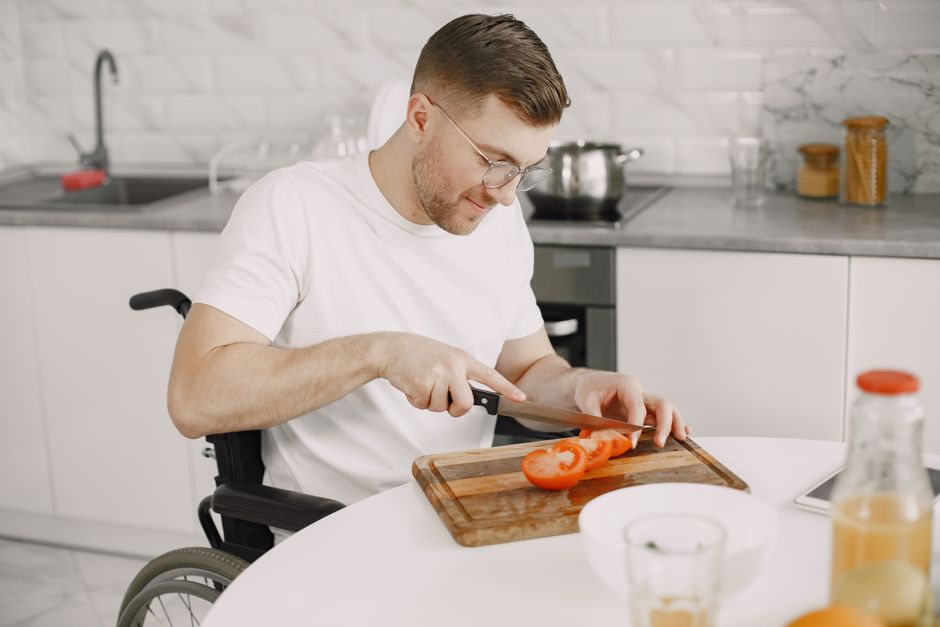
Meal planning and preparation covers planning simple meals, making a grocery list, shopping for ingredients, using kitchen appliances safely, and following a recipe. Start with breakfast or lunch before moving to multi-step dinners.
Cleaning and home maintenance includes daily tidying, doing laundry, vacuuming, taking out trash, and checking that doors are locked and appliances are off. These routines keep a home safe and comfortable.
Money management means budgeting for household expenses, paying bills on time, understanding spending choices, and saving for a goal. Even small steps, like tracking a weekly allowance or comparing prices at the store, build financial confidence.
Time management and routines involve building daily schedules, using a calendar or app, and planning ahead for appointments. A visual weekly schedule on the refrigerator can be a powerful tool.
Community access covers using transportation, running errands, accessing neighborhood resources, and participating in community activities. Riding the bus, visiting the library, or shopping at a local store are all skills that grow with practice.
Practical Teaching Strategies That Work at Home
You do not need to be a professional to support skill-building at home. You need patience, structure, and a willingness to let your family member try, struggle a little, and succeed. Progress looks different for everyone. The goal is growth, not perfection.
Task Analysis: Breaking Skills into Small Steps
Task analysis means breaking a task like "do laundry" into tiny steps: sort clothes, load the machine, add soap, start the cycle, move clothes to the dryer, fold, and put away. Teach one step at a time. Let the person master sorting before adding the machine settings.
Use checklists and visual supports. A written list, a series of pictures, or a tablet app can guide the person through each step without constant verbal reminders. The checklist becomes the teacher, which builds independence.
Building Routines and Using Visual Supports
Consistent routines reduce decision fatigue and help new skills become automatic habits. When the same sequence happens every day, the brain stops working so hard and the skill becomes routine.
Visual schedules give the individual a sense of control and predictability. A whiteboard with the day's tasks, a printed chart with pictures, or a calendar app all work. Pair routines with natural prompts: "After breakfast, we clear the table" is clearer than "clean up later."
Practice in Real Settings, Then Step Back
Skills learned in real environments transfer better than simulated practice. Cook in the actual kitchen. Ride the actual bus route. Shop at the actual grocery store.
Use the "watch, assist, then step back" method. First, demonstrate the skill while your family member watches. Next, do it together, hands-on. Finally, let them try it independently while you stay nearby. Step back a little more each time.
Celebrate small wins loudly. Each mastered step builds momentum for the next one. A first solo load of laundry deserves the same enthusiasm as a graduation.
How Wisconsin Families Can Access Training and Support
Finding the right support can feel overwhelming. The good news is that Wisconsin has clear pathways for families, and you can start today.
Funding Options: CLTS, IRIS, and Other Pathways
CLTS, the Children's Long-Term Support program, serves families with children and young adults with disabilities. Nonmedical respite and skill-building supports may be available in Milwaukee, Waukesha, Ozaukee, and Washington counties. CLTS is often the first place families learn about household management training.
IRIS, which stands for Include, Respect, I Self-Direct, is Wisconsin's self-directed long-term care program for adults. Participants manage their own budget and choose their own support workers and services. Daily living skills instruction and life skills training may be available through these programs, depending on eligibility and enrollment status.
Your county aging and disability resource center, or ADRC, is the best starting point for guidance on eligibility and next steps. They can explain which program fits your family member's age, needs, and goals.
Working with Support Providers
Look for providers who take a person-centered approach. They should ask about the individual's goals and culture, not just their diagnosis. A good provider wants to know what your family member wants to learn, not only what they cannot do.
Ask providers about their teaching methods. Do they use task analysis, visual supports, and real-environment practice? Do they involve family members in the plan? The answers tell you whether the provider will build skills or simply manage tasks.
Remember that you know your family member best. You are a key partner in any training plan, not a bystander. Your observations, your encouragement, and your follow-through at home make the training stick.
Common Questions from Families
How Long Does It Take to Learn Household Management Skills?
There is no single timeline. Progress depends on the individual, the skill, and the consistency of practice. Some skills click in weeks. Others take months or years. Expect plateaus and breakthroughs. The goal is steady progress, not a finish line. Celebrate every milestone, from making a first meal to managing a weekly budget.
What If My Family Member Resists Training?
Resistance often comes from fear of failure or past negative experiences, not lack of ability. Start with skills the person already enjoys or feels confident about. If they like sandwiches, start there. If they enjoy organizing, begin with sorting laundry.
Offer choices whenever possible: "Do you want to plan Tuesday's dinner or Thursday's?" Choice builds buy-in. When a person feels in control, resistance often softens.
Are There Free or Low-Cost Resources?
Yes. Many Wisconsin programs, including CLTS and IRIS, can cover skill-building services when they are part of an approved plan. Look for free worksheets, checklists, and visual supports online. Many disability organizations offer downloadable materials at no cost. Your local ADRC can point you to low-cost community resources, workshops, and support groups.
The Bottom Line: Small Steps, Big Independence
Self-direction and household management skills are learnable at any age. Training at home is one of the most effective ways to build lasting independence because it happens where life actually happens.
Start small. Pick one skill, break it into steps, and practice together. Maybe this week it is making a grocery list. Next month it is doing a load of laundry. Each step is a brick in the foundation of a more independent life.
You do not have to do this alone. Wisconsin has programs, providers, and a community of families walking the same path. If you are ready to explore support options, you can start a referral and begin the conversation about what skill-building could look like for your family member.
You are your family member's best champion. Every small step you take together is a step toward a life they direct, in a home they manage, with a future they choose.